
Research
A research campaign reads your connected sources, interviews the people who’d know, and drafts a proposal — outcomes, workflows, or memory — for you to review and publish.
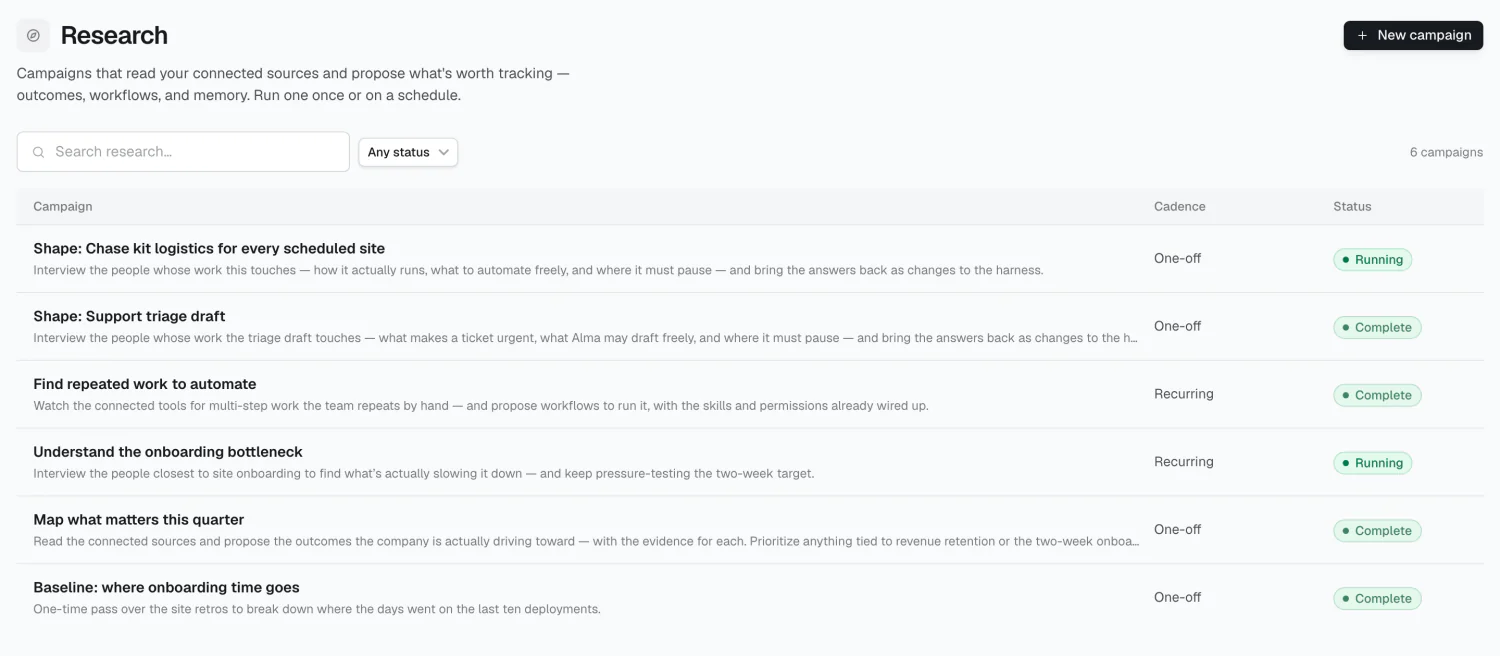
Building a campaign
Section titled “Building a campaign”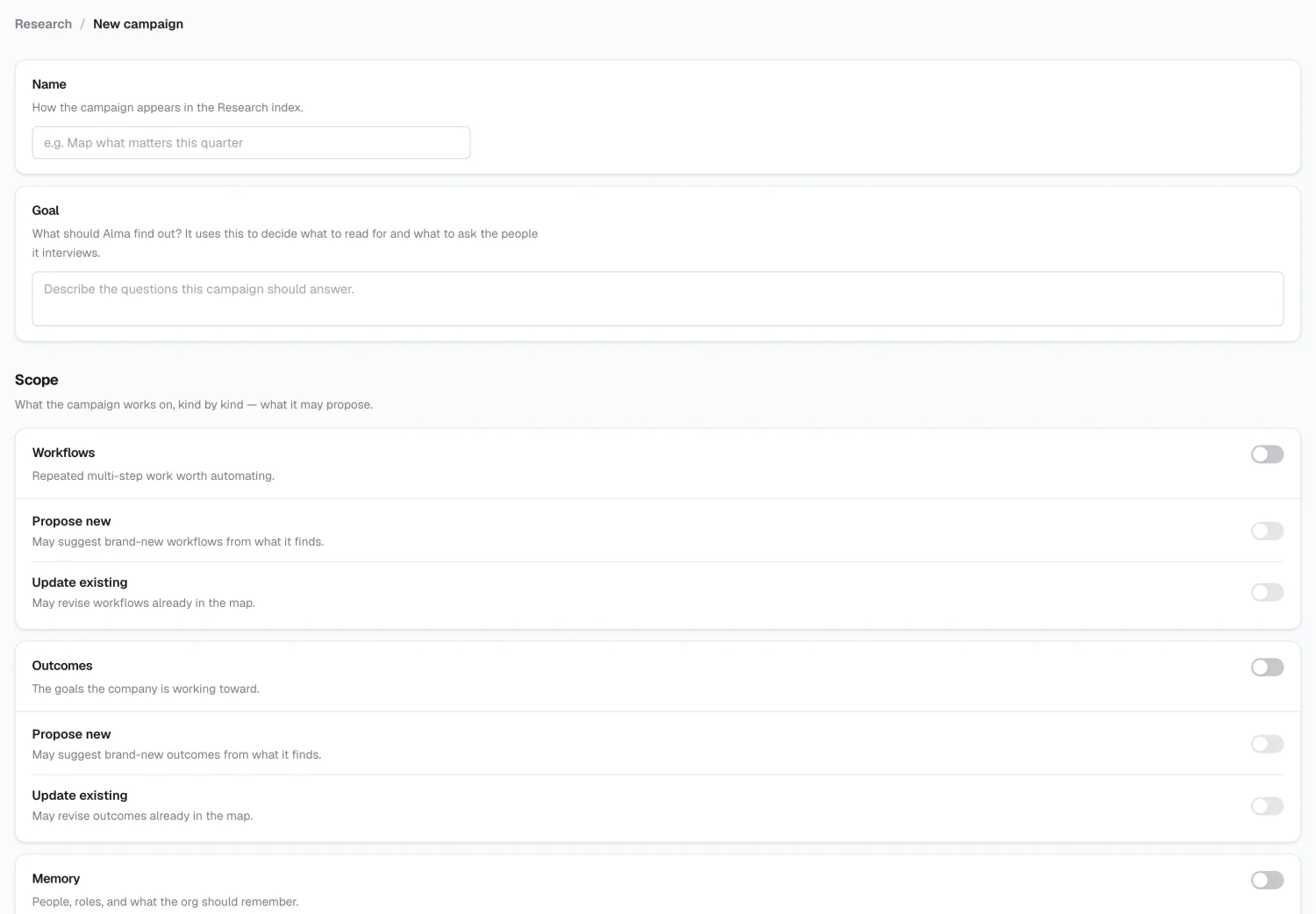
Cadence
Section titled “Cadence”- One-off — runs once
- Recurring — runs on a schedule, keeping proposals current
What the campaign may propose:
- Outcomes — company priorities
- People and Groups — who’s who, and how they’re organized
- Topics — what belongs in Memory
- Workflows — recurring work worth automating
Scope narrowly. A campaign scoped to “propose everything” produces a shallow draft; one scoped to “map our renewal process” produces something you can act on.
Sources
Section titled “Sources”Which connections the campaign may read.
Interviews
Section titled “Interviews”Who Alma should ask.
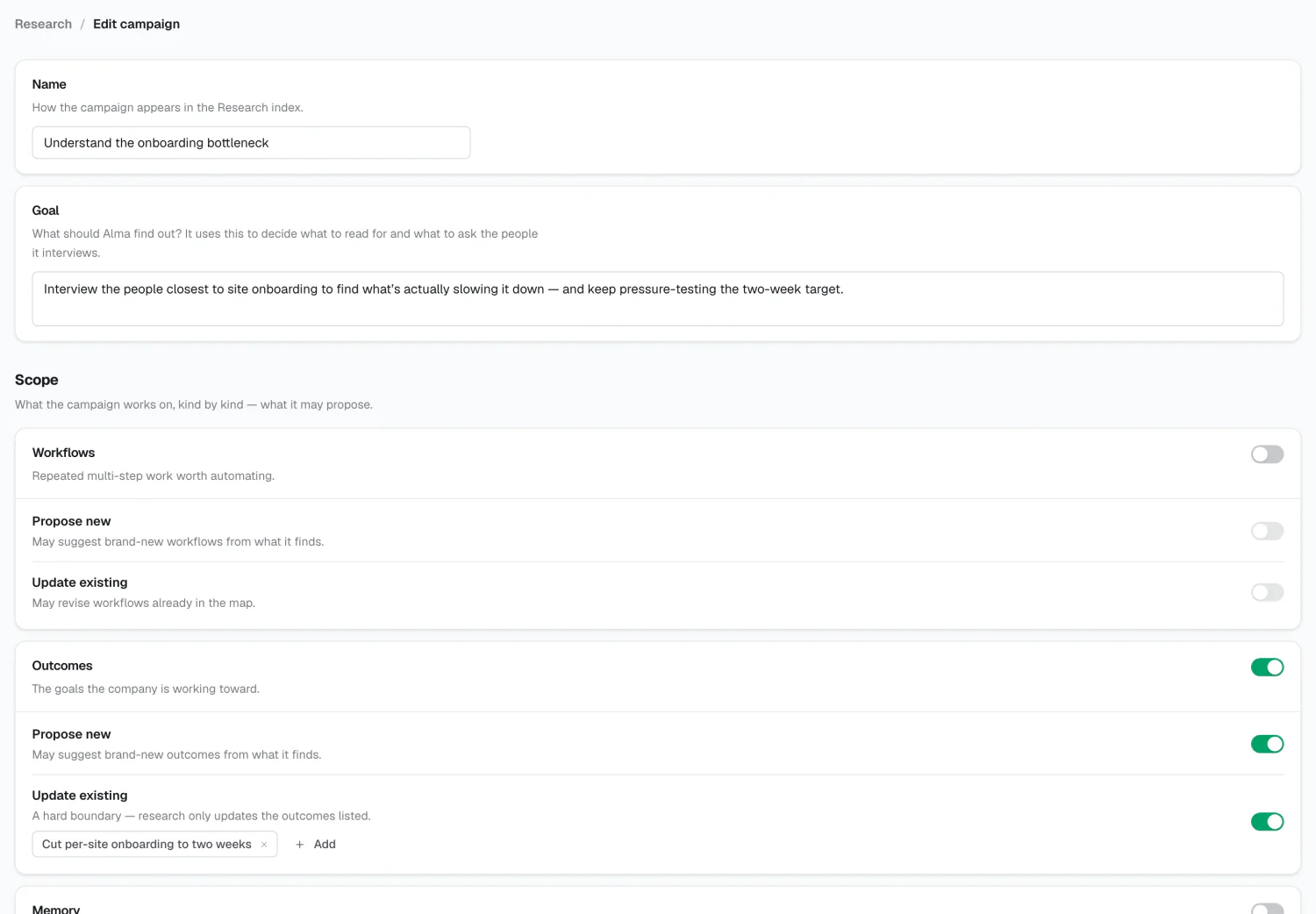
Each run creates an Ask routed to the people you pick. Their answers fold into the proposal.
Results
Section titled “Results”Everything a run proposes arrives as suggested — nothing is published automatically. Accept what’s right, correct what’s close, reject the rest. Rejections are signal: a campaign that keeps proposing the same wrong thing usually needs a narrower scope or different sources.
Accepted proposals become real outcomes, groups, topics, or workflow drafts. A proposed workflow arrives as a Proposed draft — still inert, still yours to enable or not.
Starting from research
Section titled “Starting from research”Both Outcomes and Workflows offer research as the recommended starting point when empty. Correcting a draft of twenty proposals is faster than writing twenty from scratch.
2026 Alma